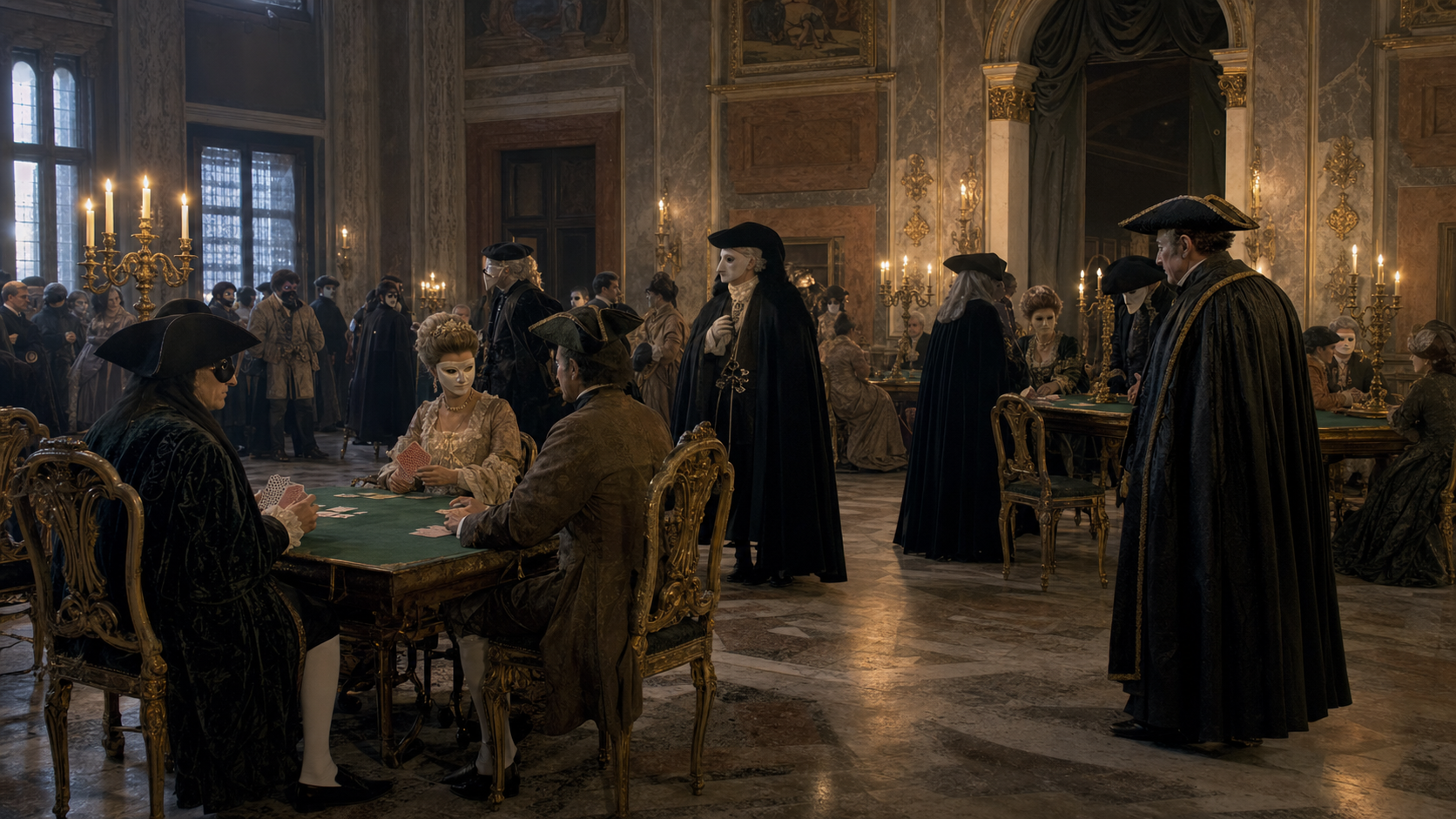
The Ridotto, opened in Venice in 1638, is commonly treated as the first government-sanctioned public gambling house. Entry was public in principle, but formal dress and high stakes narrowed its clientele. Across the eighteenth and nineteenth centuries, rooms at Spa, Baden-Baden and Wiesbaden linked gaming to orchestras, gardens and mineral-water tourism. This combination supplied the operational model later refined in Monaco.
Key dates in the record
- 1638 Venice authorises the Ridotto during carnival
- 1774 the Ridotto closes under reformist pressure
- 1765 the Redoute opens at Spa in the Austrian Netherlands
- 1822 the Kurhaus model develops at Wiesbaden
Regulation came before spectacle
The Ridotto, opened in Venice in 1638, is commonly treated as the first government-sanctioned public gambling house. Entry was public in principle, but formal dress and high stakes narrowed its clientele. Across the eighteenth and nineteenth centuries, rooms at Spa, Baden-Baden and Wiesbaden linked gaming to orchestras, gardens and mineral-water tourism. This combination supplied the operational model later refined in Monaco.
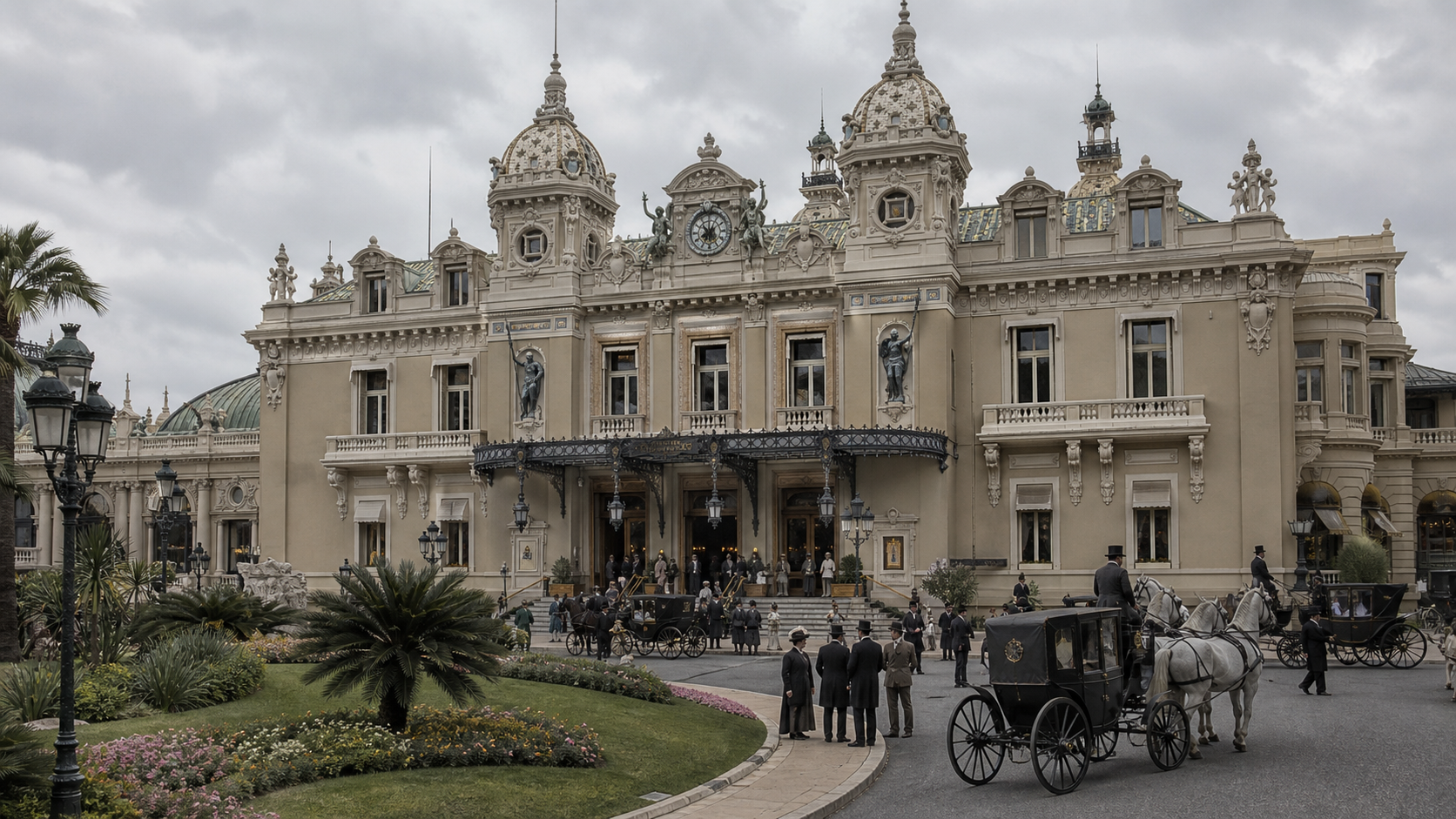
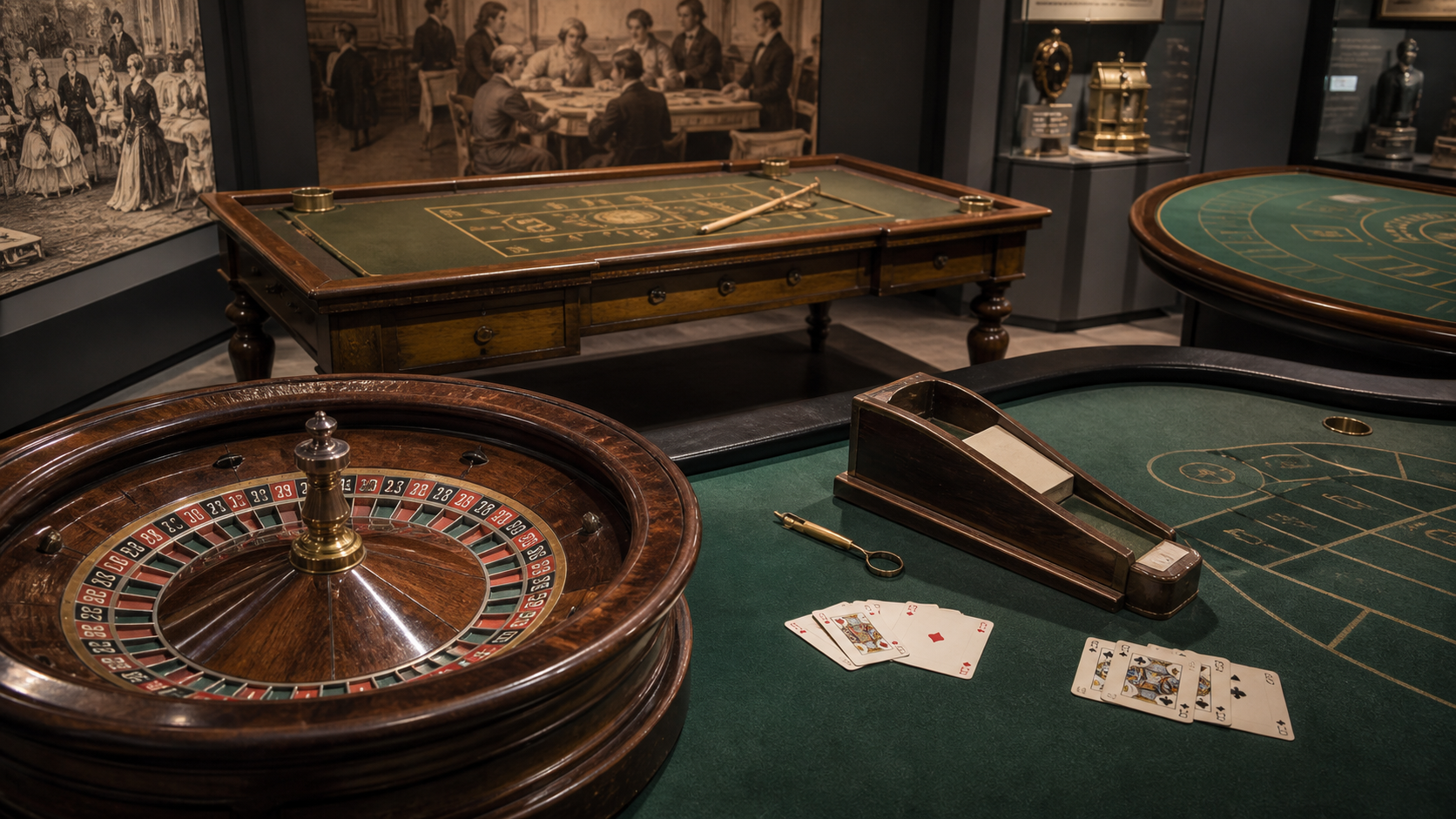
Casino history is clearest when buildings, regulation and operating technology are read together.
The record also shows that practices did not move uniformly between jurisdictions. Local licensing, transport, land ownership and tourism shaped both the pace and the form of change.
IMAGES IN THE RECORD
Research note & sources
This overview draws on institutional histories, regulatory chronologies, architectural records and established reference works. Dates are used where the documentary record is consistent.
- Encyclopaedia Britannica, histories of gambling and principal cities.
- Official municipal, regulatory and property archives relevant to the subject.
- David G. Schwartz, Roll the Bones: The History of Gambling .