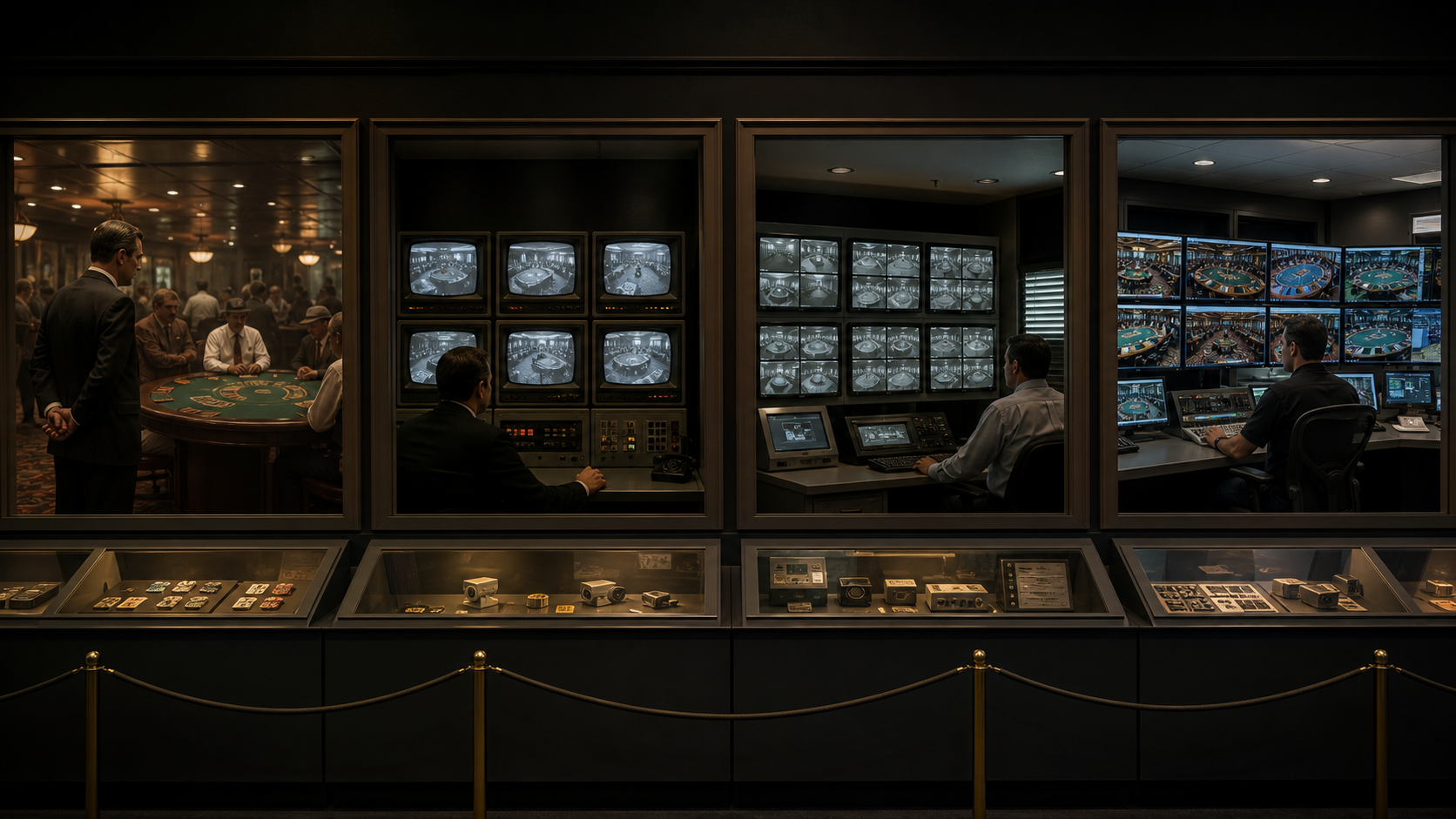
Table layouts and staffing made cash, chips and cards visible to several employees at once. CCTV extended that principle beyond the floor, producing reviewable records for disputes and investigations. Modern systems combine video, transaction data and controlled access, while regulation determines retention, independence and reporting duties.
Key dates in the record
- Early floors dealers, inspectors and pit bosses supervise play
- 1960s–70s closed-circuit television expands
- 1980s–90s dedicated surveillance rooms and recording become standard
- Present analytics support, but do not replace, trained observers
Watching the transaction
Table layouts and staffing made cash, chips and cards visible to several employees at once. CCTV extended that principle beyond the floor, producing reviewable records for disputes and investigations. Modern systems combine video, transaction data and controlled access, while regulation determines retention, independence and reporting duties.
Casino history is clearest when buildings, regulation and operating technology are read together.
The record also shows that practices did not move uniformly between jurisdictions. Local licensing, transport, land ownership and tourism shaped both the pace and the form of change.
IMAGES IN THE RECORD
Research note & sources
This overview draws on institutional histories, regulatory chronologies, architectural records and established reference works. Dates are used where the documentary record is consistent.
- Encyclopaedia Britannica, histories of gambling and principal cities.
- Official municipal, regulatory and property archives relevant to the subject.
- David G. Schwartz, Roll the Bones: The History of Gambling .