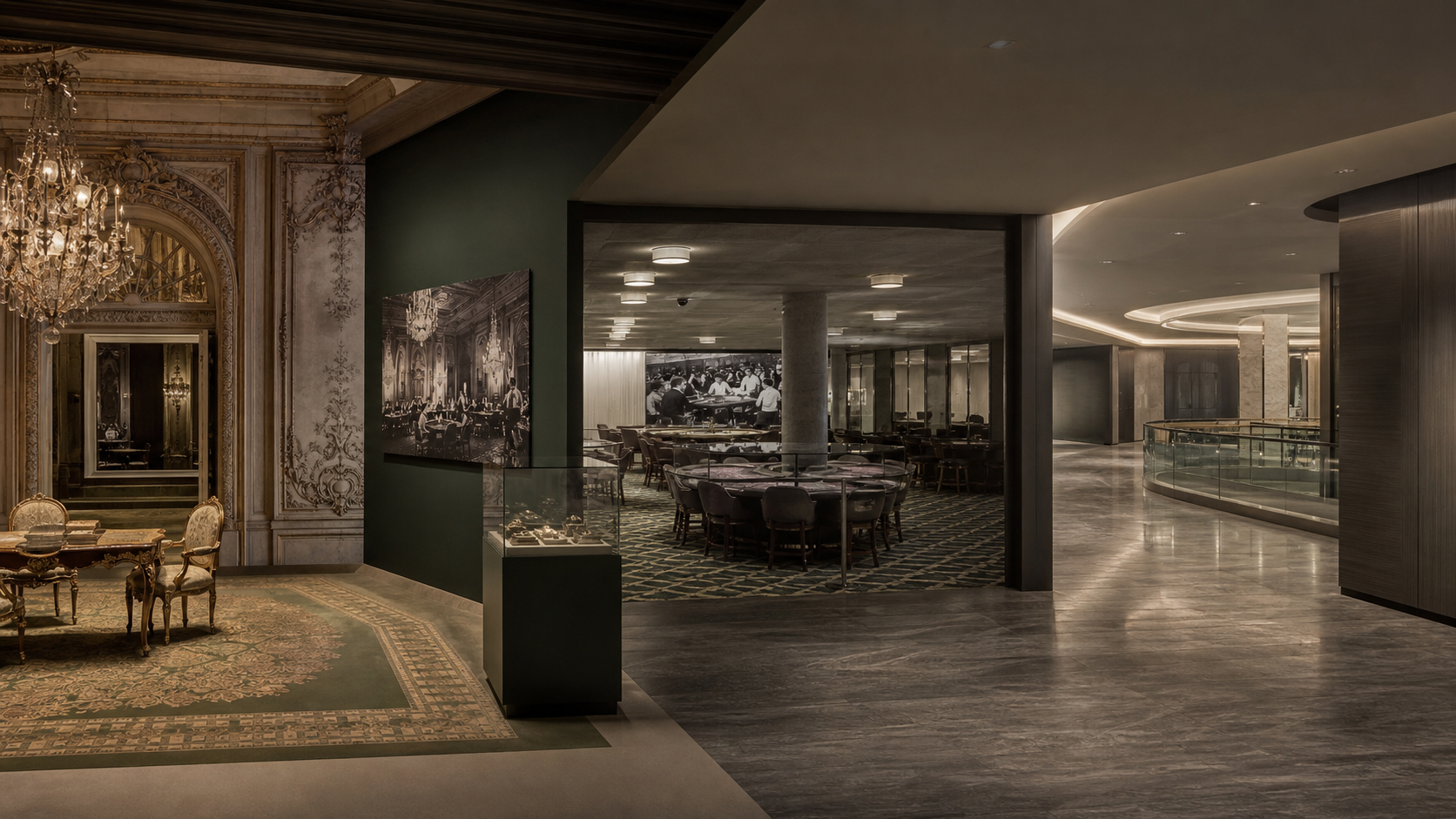
Stanley Ho’s Sociedade de Turismo e Diversões de Macau operated the monopoly from 1962. After liberalisation, overseas concessionaires introduced Las Vegas-style resort finance and larger non-gaming programmes. Land reclamation between Taipa and Coloane created Cotai, where hotel inventory, convention space and gaming floors could be assembled at unprecedented scale.
Key dates in the record
- 1847 the Portuguese administration legalises gambling
- 1962 STDM receives the casino monopoly
- 1999 sovereignty transfers to China
- 2002 new concessions open the market
From harbour rooms to Cotai
Stanley Ho’s Sociedade de Turismo e Diversões de Macau operated the monopoly from 1962. After liberalisation, overseas concessionaires introduced Las Vegas-style resort finance and larger non-gaming programmes. Land reclamation between Taipa and Coloane created Cotai, where hotel inventory, convention space and gaming floors could be assembled at unprecedented scale.
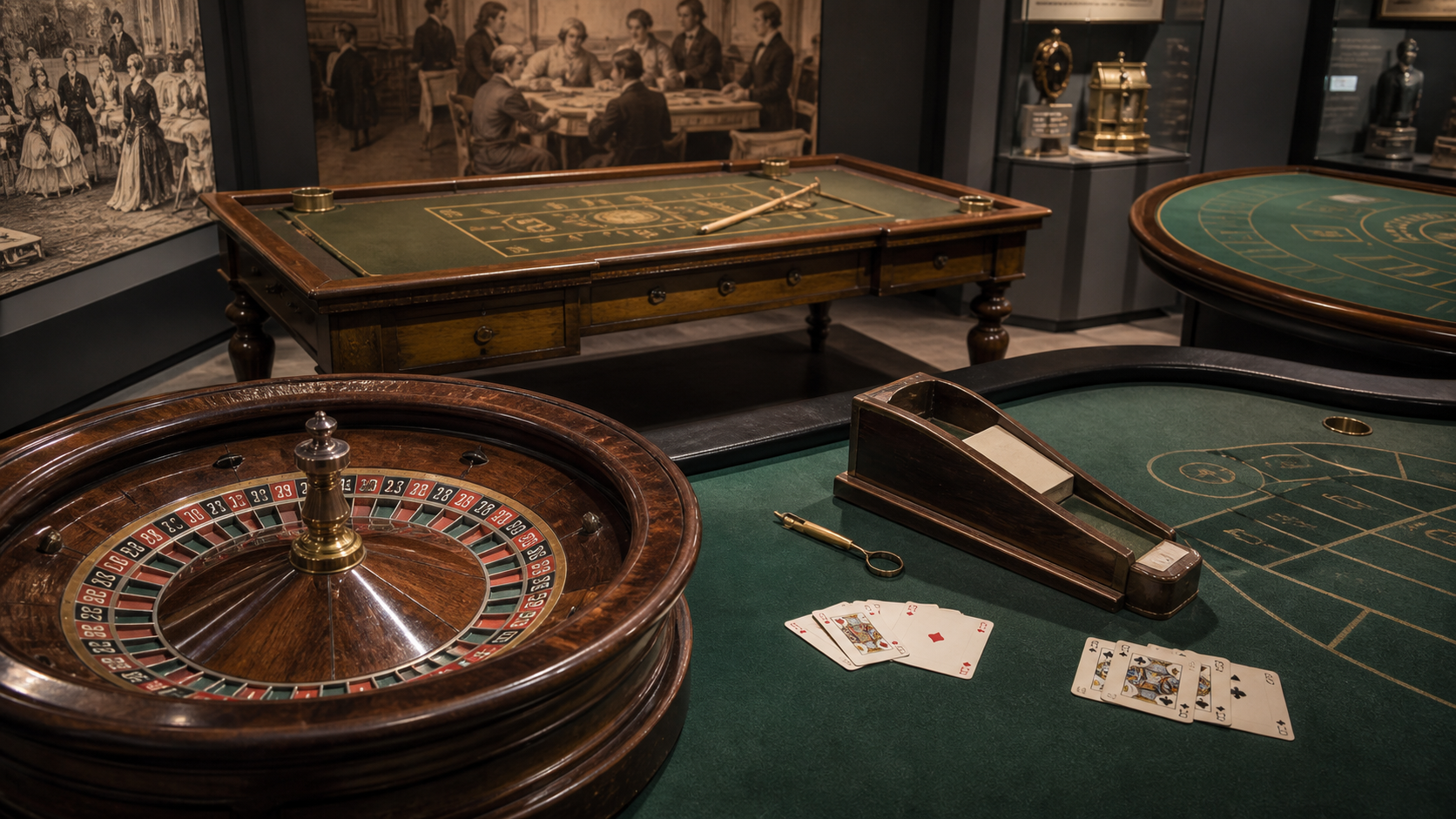
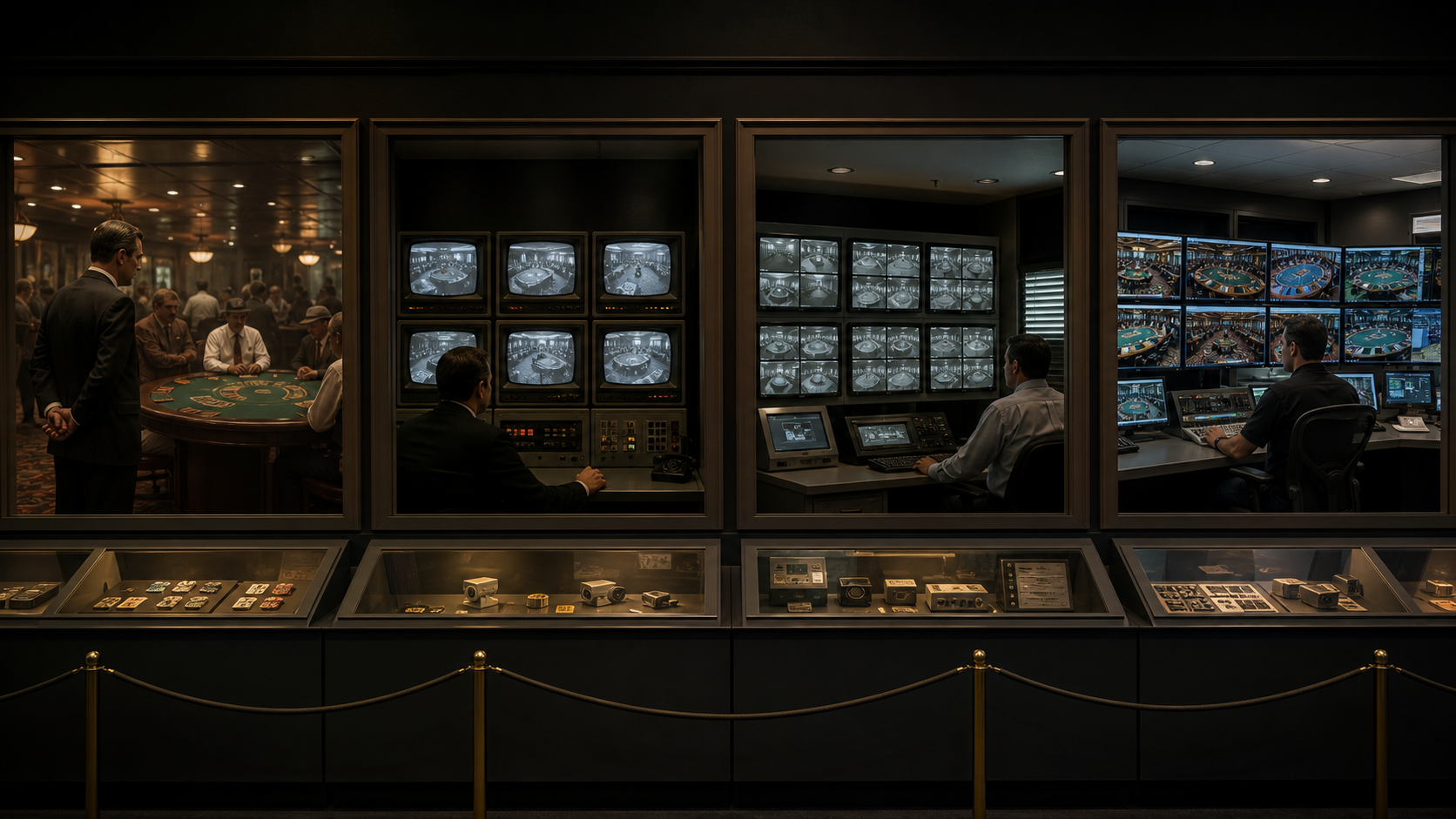
Casino history is clearest when buildings, regulation and operating technology are read together.
The record also shows that practices did not move uniformly between jurisdictions. Local licensing, transport, land ownership and tourism shaped both the pace and the form of change.
IMAGES IN THE RECORD
Research note & sources
This overview draws on institutional histories, regulatory chronologies, architectural records and established reference works. Dates are used where the documentary record is consistent.
- Encyclopaedia Britannica, histories of gambling and principal cities.
- Official municipal, regulatory and property archives relevant to the subject.
- David G. Schwartz, Roll the Bones: The History of Gambling .