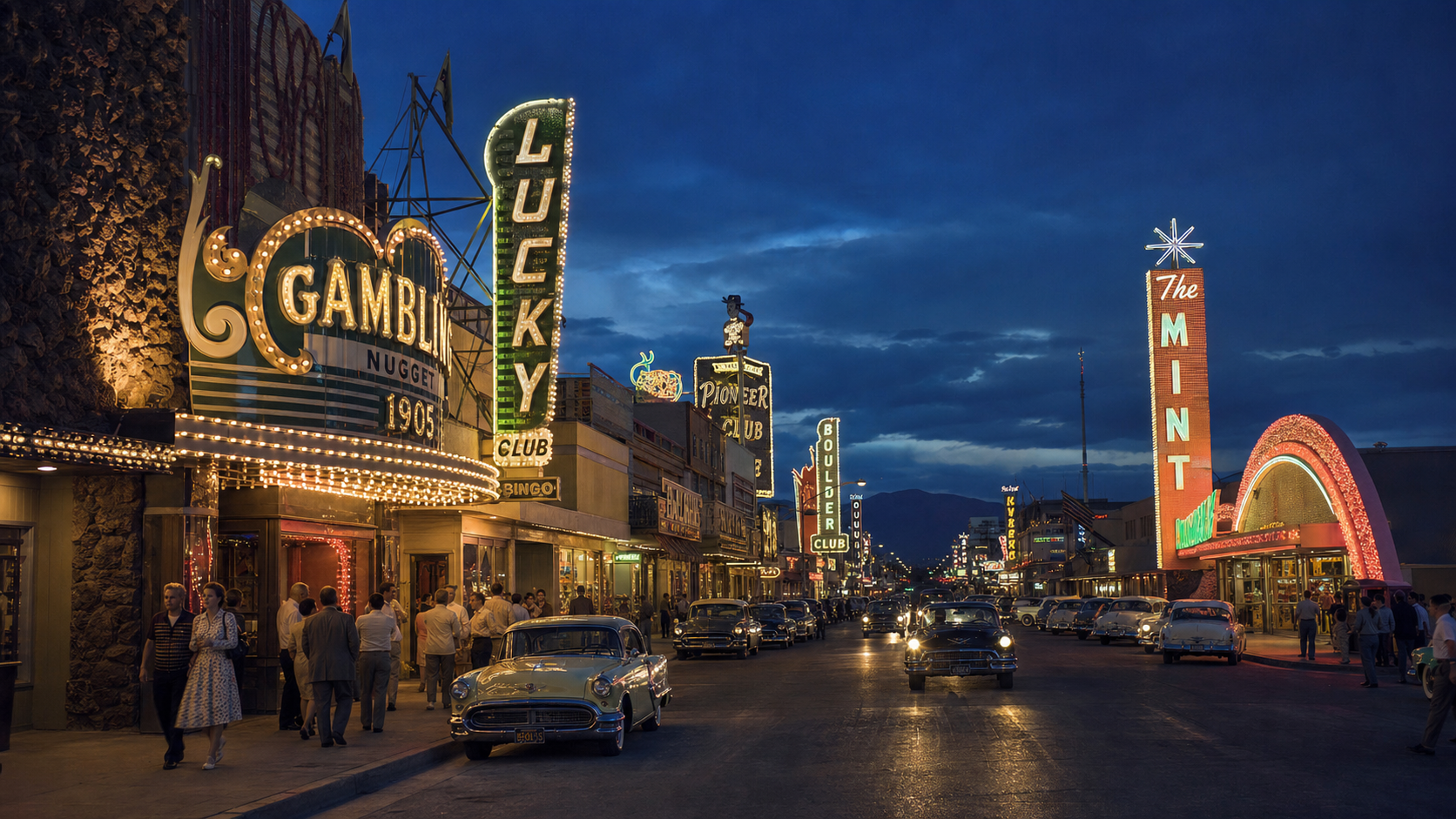
Early gambling clustered downtown around Fremont Street. El Rancho Vegas combined a casino, accommodation, dining and entertainment beside the road to Los Angeles. The Strip later moved from low-rise themed properties to towers and, after the Mirage, capital-intensive integrated resorts. Corporate ownership and public financing replaced much of the earlier operator-led model.
Key dates in the record
- 1931 Nevada legalises casino gambling
- 1941 El Rancho Vegas opens on Highway 91
- 1946 the Flamingo opens
- 1989 the Mirage resets the scale of the Strip
The roadside resort becomes a city
Early gambling clustered downtown around Fremont Street. El Rancho Vegas combined a casino, accommodation, dining and entertainment beside the road to Los Angeles. The Strip later moved from low-rise themed properties to towers and, after the Mirage, capital-intensive integrated resorts. Corporate ownership and public financing replaced much of the earlier operator-led model.
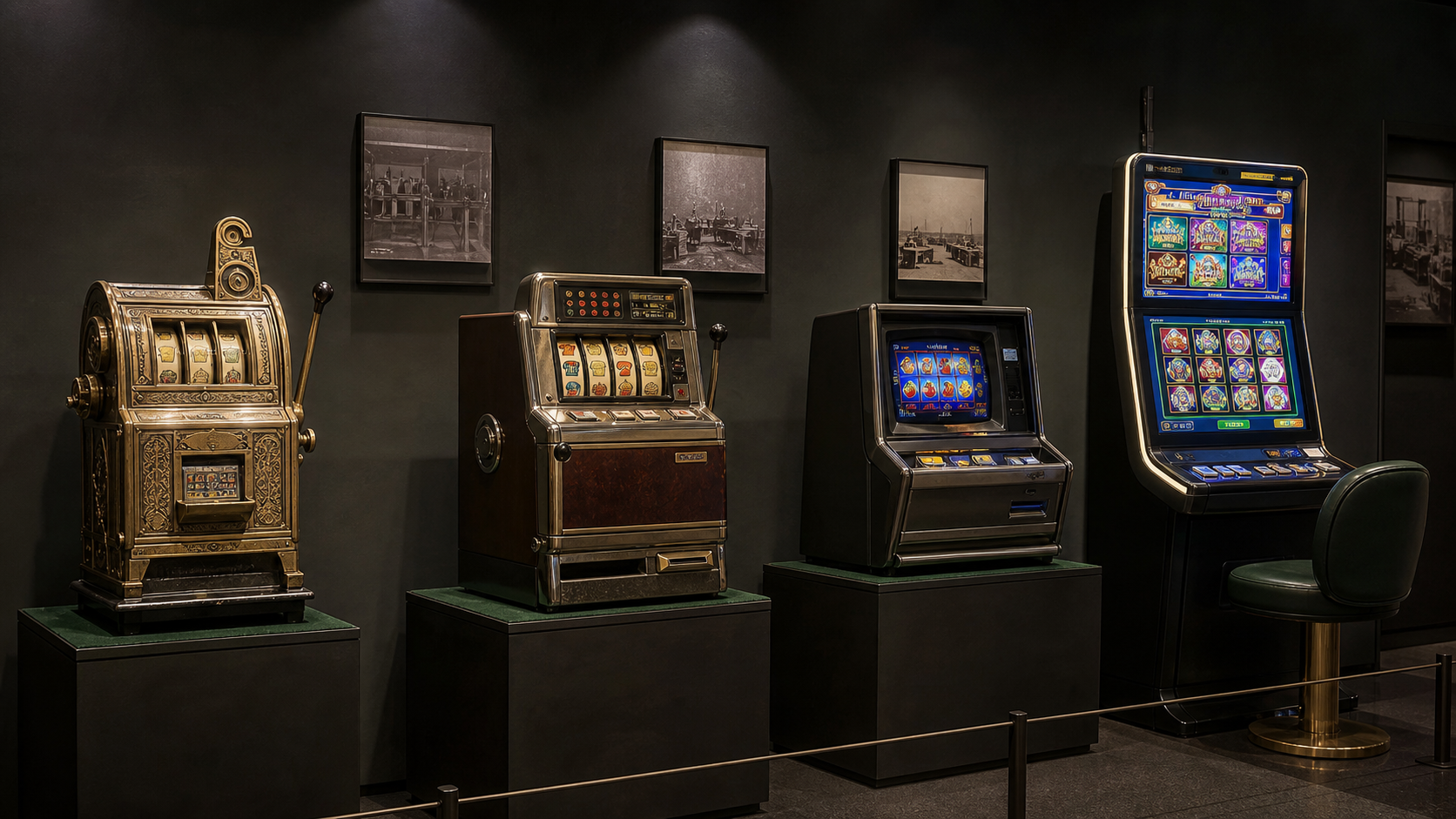
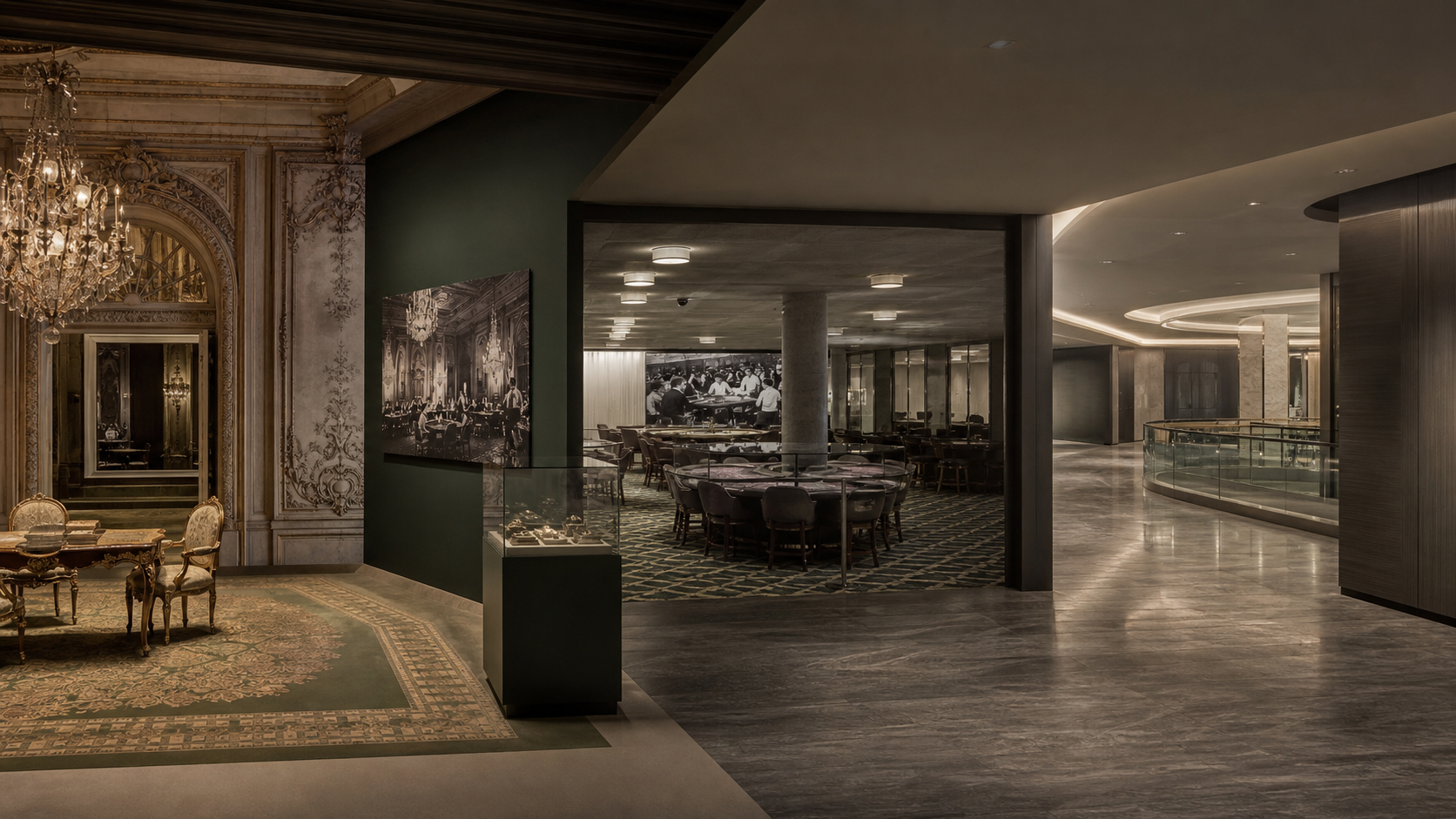
Casino history is clearest when buildings, regulation and operating technology are read together.
The record also shows that practices did not move uniformly between jurisdictions. Local licensing, transport, land ownership and tourism shaped both the pace and the form of change.
IMAGES IN THE RECORD
Research note & sources
This overview draws on institutional histories, regulatory chronologies, architectural records and established reference works. Dates are used where the documentary record is consistent.
- Encyclopaedia Britannica, histories of gambling and principal cities.
- Official municipal, regulatory and property archives relevant to the subject.
- David G. Schwartz, Roll the Bones: The History of Gambling .