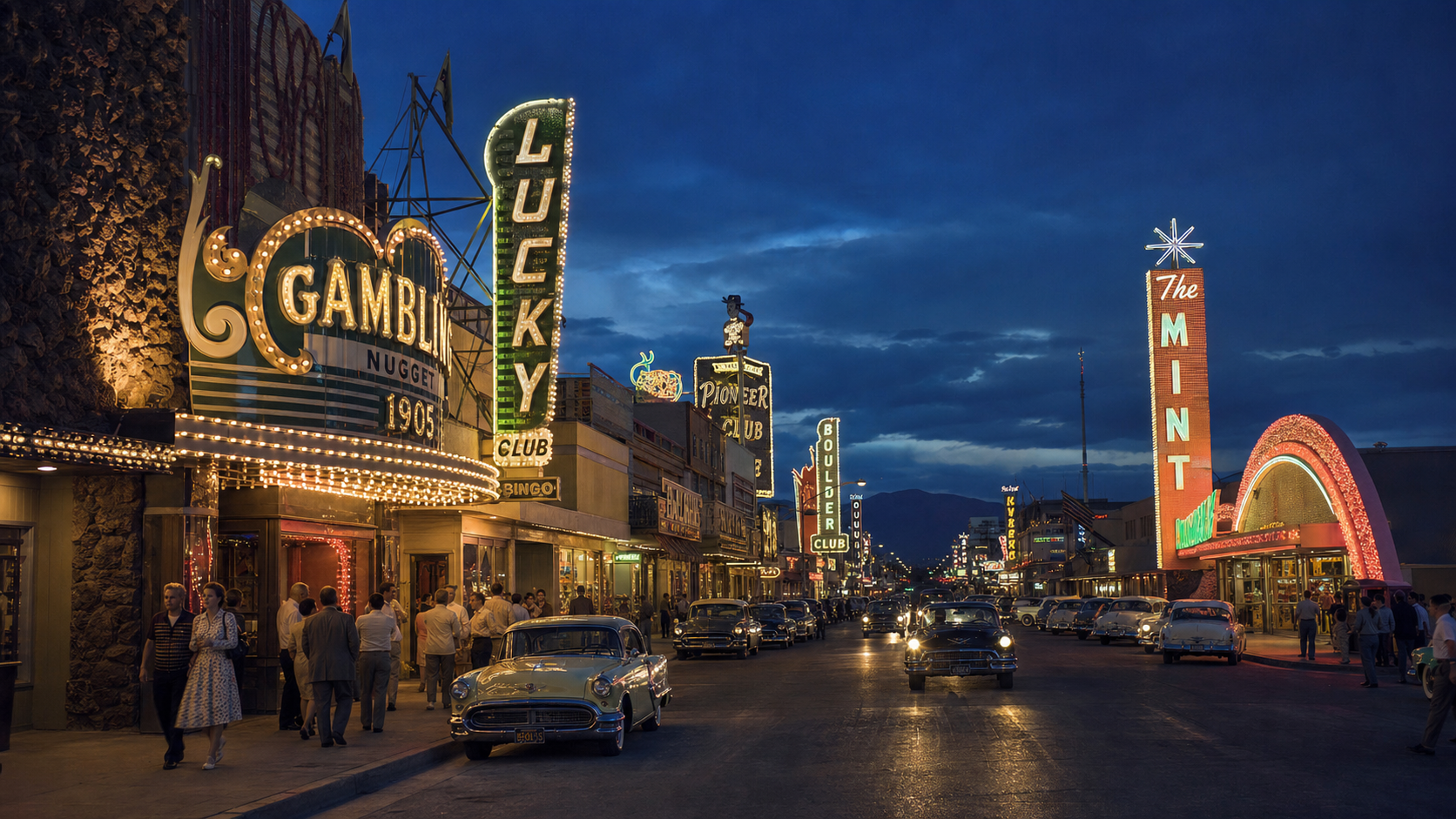
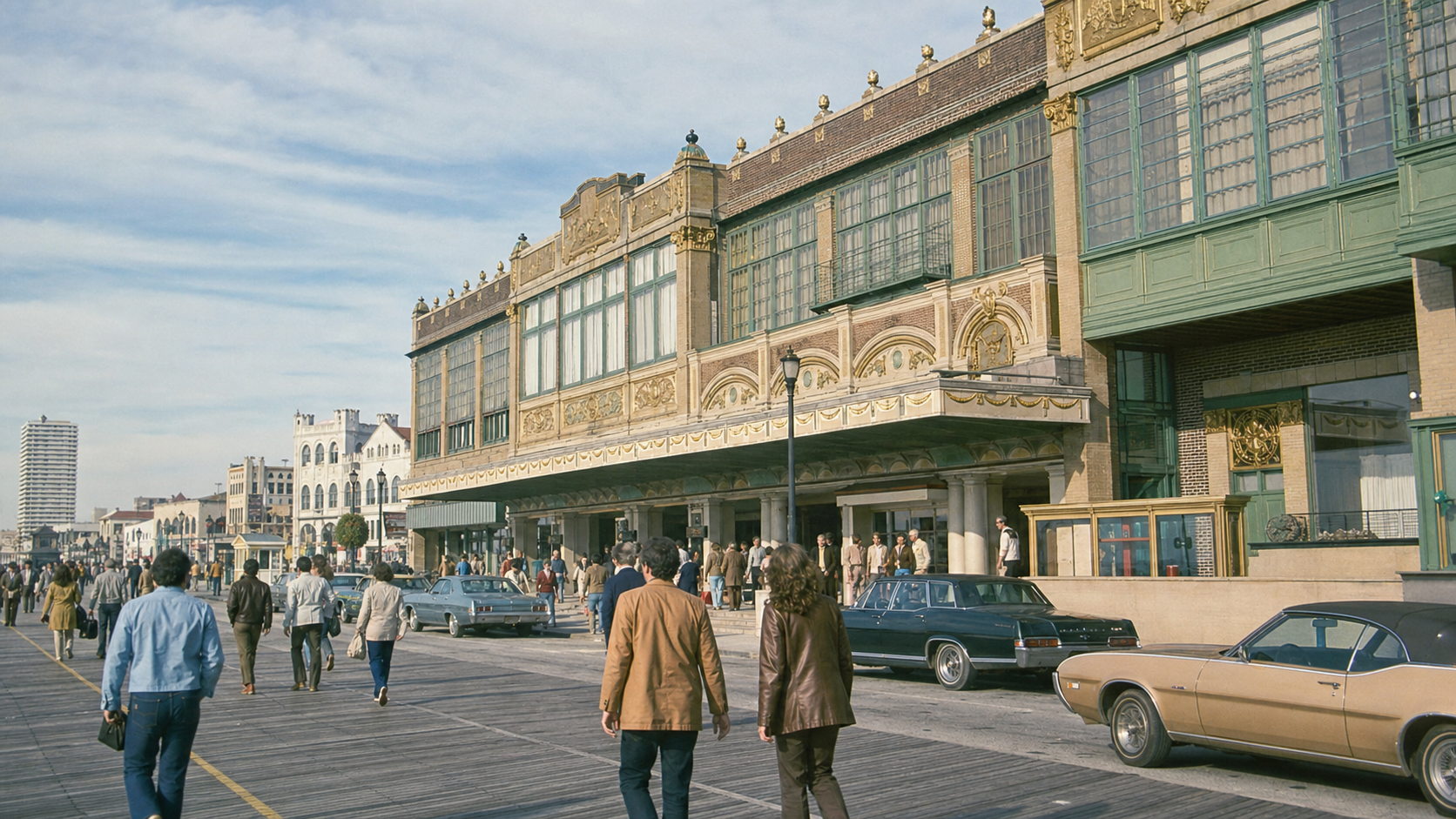
On the Las Vegas Strip, demolition became a development strategy: low-rise resorts occupied valuable parcels that could support much larger programmes. Elsewhere, casinos were converted, renamed or stripped of gaming licences. The archive distinguishes a lost building from a continuing property and records what replaced it.
Key dates in the record
- 1952–1996 Sands Hotel and Casino, Las Vegas
- 1955–1996 Dunes, Las Vegas
- 1957–2007 Stardust, Las Vegas
- 1990–2016 Trump Taj Mahal under its original name
Why famous rooms vanish
On the Las Vegas Strip, demolition became a development strategy: low-rise resorts occupied valuable parcels that could support much larger programmes. Elsewhere, casinos were converted, renamed or stripped of gaming licences. The archive distinguishes a lost building from a continuing property and records what replaced it.
Casino history is clearest when buildings, regulation and operating technology are read together.
The record also shows that practices did not move uniformly between jurisdictions. Local licensing, transport, land ownership and tourism shaped both the pace and the form of change.
IMAGES IN THE RECORD

Research note & sources
This overview draws on institutional histories, regulatory chronologies, architectural records and established reference works. Dates are used where the documentary record is consistent.
- Encyclopaedia Britannica, histories of gambling and principal cities.
- Official municipal, regulatory and property archives relevant to the subject.
- David G. Schwartz, Roll the Bones: The History of Gambling .